ServicesRoof Replacement
Roof Replacement in Newport, When a Repair Won't Hold
We suggest a new roof only when patching would cost you more in the long run. When that's the case, we show you photos of what we found, explain why, and walk you through each layer going onto your home, from the decking up to the ridge.
When a New Roof Is Worth It
Plenty of leaking roofs still have good years left. A shingle that lifted in the wind, a split rubber boot around a plumbing vent or worn flashing at the chimney is usually a fix, and we'll say so plainly. That repair question comes first on every visit.
A new roof earns its cost when the wear is everywhere instead of in one spot. Think of shingles worn bare of granules on every slope, roof boards that feel spongy underfoot in more than one area, or a home that already carries two layers of shingles. Northern Kentucky winters freeze and thaw over and over, and once shingles turn brittle, each cold spell finds a new gap.
If we do recommend starting fresh, you'll get the reasons in pictures and everyday words. The decision stays with you.
What Goes Into Your New Roof
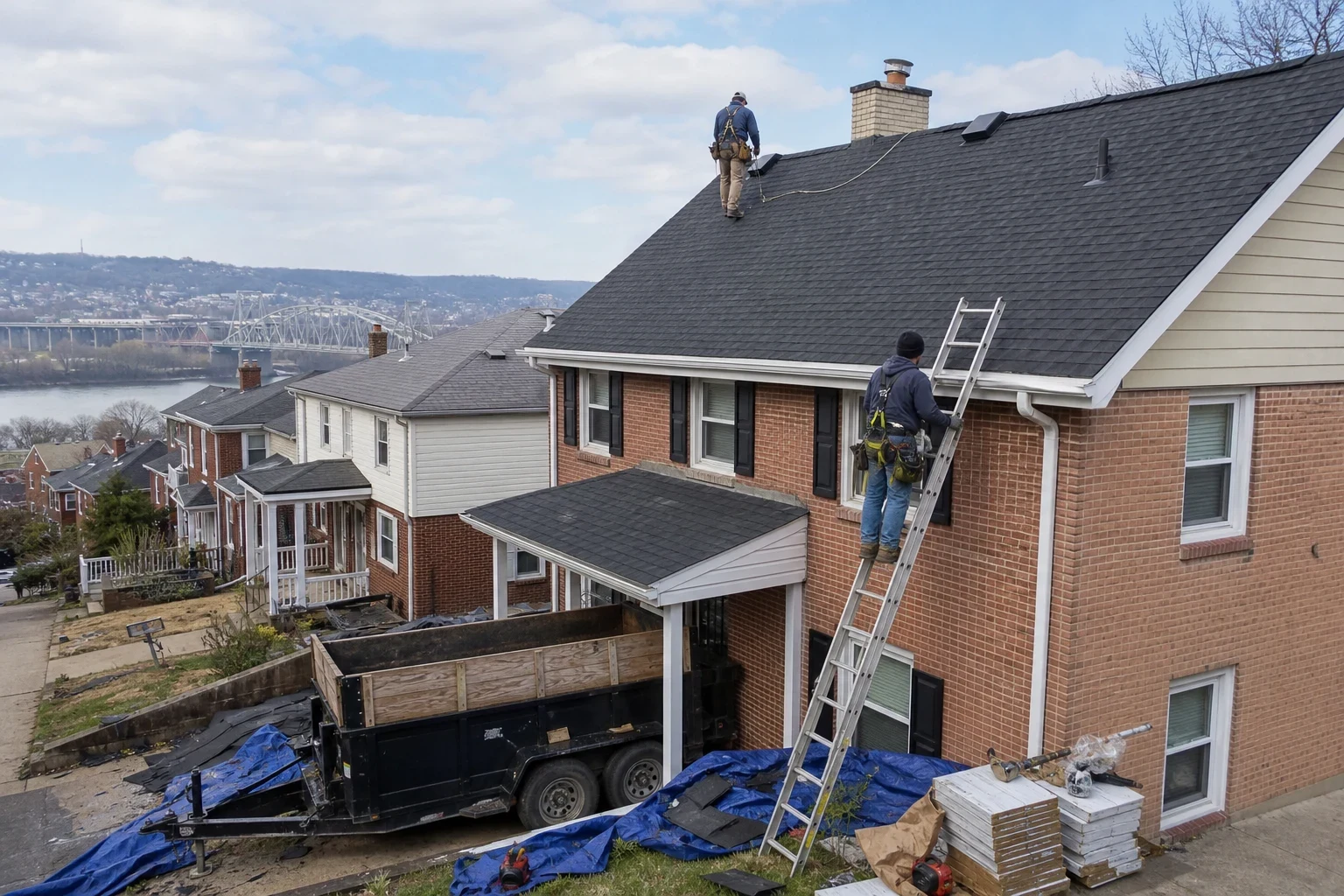
- Tear-off down to bare wood
- Every old shingle and every scrap of underlayment comes off. Laying new shingles over old ones hides trouble and adds weight, so we skip that shortcut.
- Decking checked board by board
- Once the wood is exposed, we walk it and mark any boards that are soft, rotted or peeling apart. You see those spots first, then we swap them out, and sound boards stay put.
- Ice and water barrier where it counts
- Snow that melts and refreezes at the gutter line can back water up under shingles. A self-sealing membrane along the eaves, in the valleys and around pipes keeps that water out of your home.
- Fresh flashing and pipe boots
- Chimneys, sidewalls, skylights and vent pipes all get new metal and boots. Old flashing reused on a new roof is one of the most common causes of an early leak.
- Attic airflow that works
- We check intake vents at the eaves and exhaust vents near the ridge as a pair. Balanced airflow keeps the attic drier through winter and cooler in summer, and the shingles age more slowly.
- Cleanup and a walk-through
- A rolling magnet goes over the lawn and driveway for stray nails, the old roof leaves with us, and we look over the finished work together.
Signs Your Roof Is Wearing Out
Grit collecting in the gutters
Aging shingles lose the sandy granules that shield them from sun. A thick layer of that grit at the downspouts means the shingles are getting thin.
Curled or cracked shingles on every side
A few bad shingles are a repair. When curling and cracking show up on each slope, the roof is close to done.
A dip in the roofline
A low spot between rafters often means the boards underneath have soaked up water and weakened. It's worth having someone look soon.
Leaks that keep coming back
Water showing up in two or three rooms, or a leak that returns after a fix, usually points to underlayment that has failed across the roof.
Light showing through roof boards
Stand in the attic on a sunny afternoon. Any pinpoints of daylight overhead are places where rain can get through as well.
How the Job Runs, Start to Finish
- 1
Inspection and a written estimate
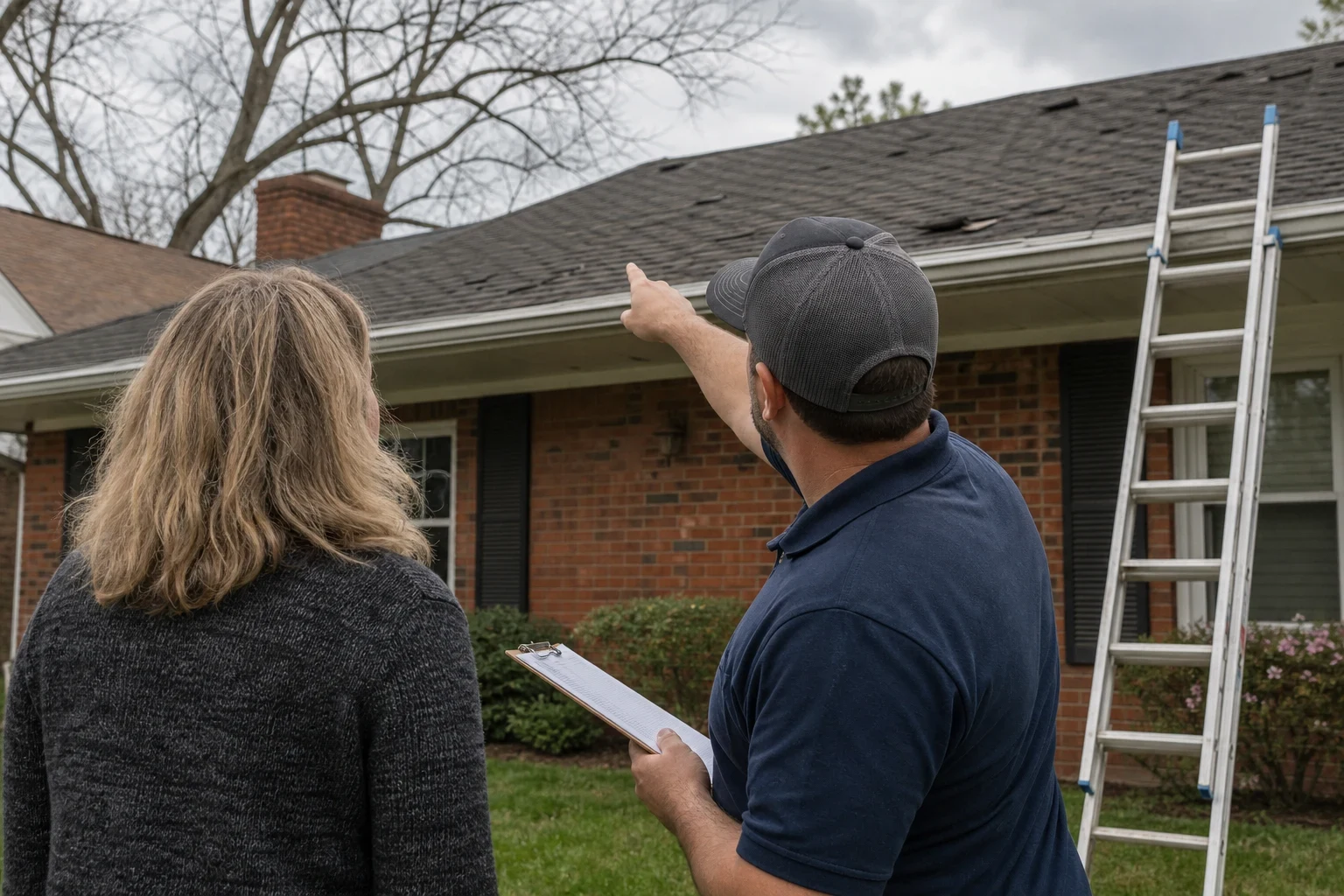
We climb the roof, check the attic and take photos, then tell you honestly if a repair is still on the table. If a new roof makes more sense, your estimate lists materials, a decking allowance and haul-away line by line.
- 2
Permits and scheduling
If your address needs a permit, we file it. We settle on a day that suits you and watch the weather closely, since an open roof and a passing shower don't mix.
- 3
Covering what's around the house
Shrubs get tarps, windows and siding get protection, and the dumpster goes where it blocks your driveway as little as possible.
- 4
Tear-off and install
We strip the roof in sections and seal each one with underlayment so nothing sits open overnight. Most homes take one to two days, depending on size and steepness.
- 5
Final sweep and look-over
Debris is hauled off, the yard is swept for nails, and we go over the new flashing and vents with you.
What Moves the Cost of Your New Roof
Every roof is priced on its own, once we've seen it up close. Your estimate breaks out each part of the job so nothing is buried. If tear-off turns up bad boards, we show you and talk it through, and only then add them.
- Size and steepness
- More square footage takes more material. Steep slopes, common on older homes around Newport, slow the work and call for extra safety setup.
- How many layers come off
- Two old layers mean more labor and more weight to haul away than one.
- What's under the shingles
- Solid decking keeps costs in check. Rotted or water-stained boards add material and time.
- Shingle style and roof features
- Architectural shingles, chimneys, skylights, dormers and valleys each change how much material and labor the job needs.
Questions About Getting a New Roof
Something not covered here? (859) 667-1817
How do I know you won't sell me a roof I don't need?
We look for a workable repair before anything else. If a fix will hold for years, that's what we quote. When we do suggest a new roof, you get the photos and a clear explanation of what's failing, so you can weigh it yourself. You're also welcome to have us price the repair alongside it.
Can new shingles go right over my old ones?
We don't do roof-overs. A second layer covers up soft boards and worn flashing, holds in heat and adds weight to your framing. Taking the old roof off lets us find and fix what's hiding underneath.
Do I have to be home while you work?
You don't, though we like to walk the roof with you at the start and again at the end. It gets loud inside, so pets may be calmer somewhere else that day. The hammering carries through the walls, so lifting framed photos off upstairs walls is a smart move, and parking on the street keeps your car clear of falling debris.
What if the weather turns mid-job?
We strip only as much as we can seal up by the end of the day. If rain shows up early, the open section gets underlayment and tarps while the crew is still on site.
Should my gutters be done at the same time?
Only if they need it. Sound gutters get protected and stay on. If yours are sagging or rusted through, handling them with the roof saves a second visit, and our Gutters page explains more.
Find Out What Your Roof Really Needs
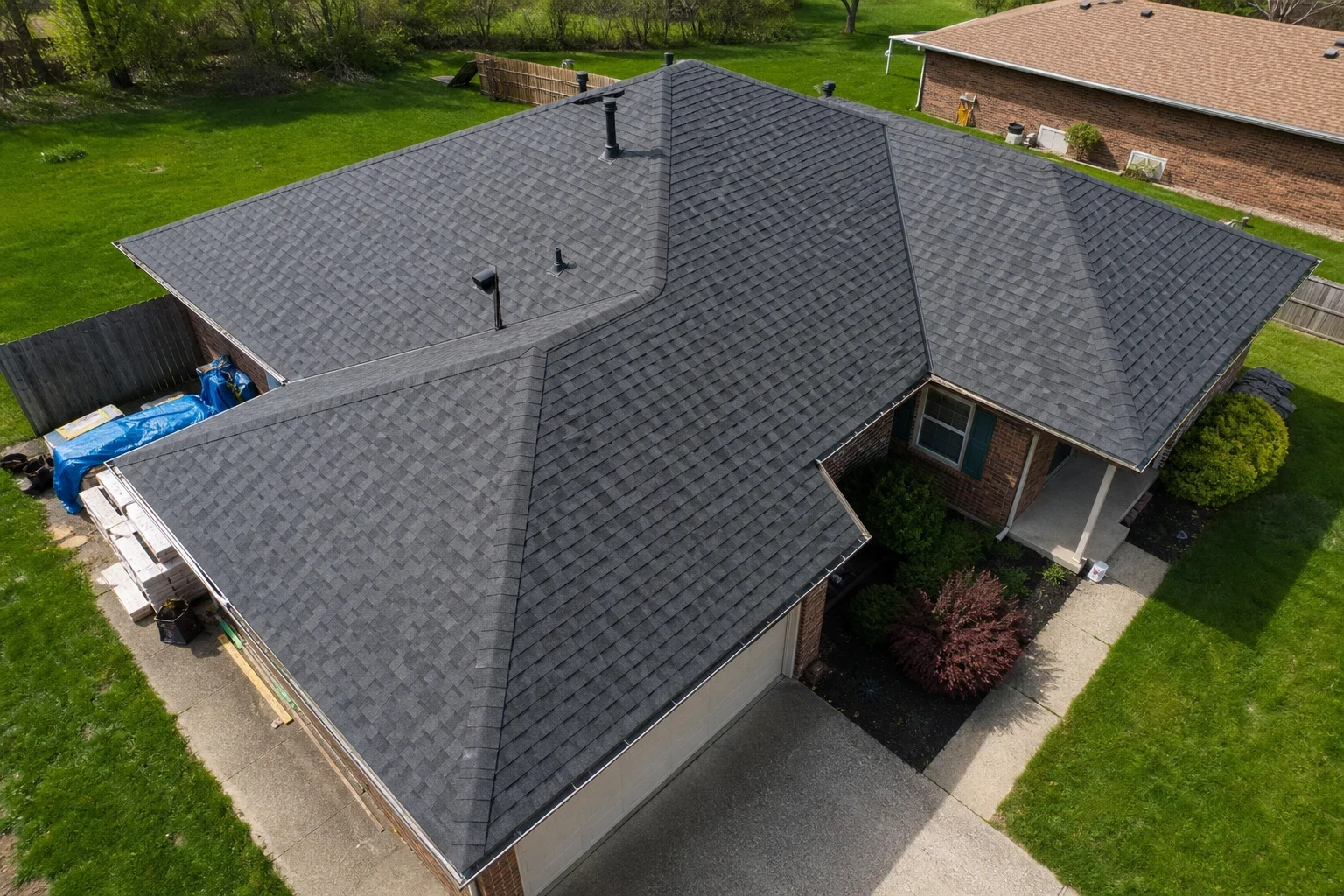
We'll look over your roof, tell you honestly whether a repair will do, and lay out your options so you can decide at your own pace. We work in Newport and nearby towns like Fort Thomas, Bellevue and Covington.